
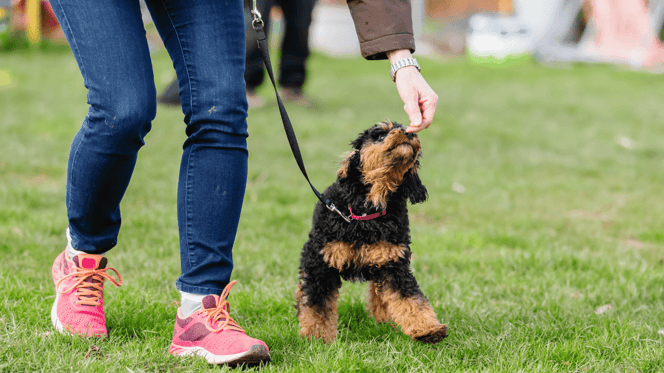
Bringing a puppy home is exciting, but without a clear daily routine, things can quickly feel overwhelming. A structured puppy training routine helps shape behaviour, build confidence and create positive habits from the very start.
The key is consistency. By repeating small actions each day and adapting your approach through training by age, you create a routine your puppy can rely on. Over time, those daily patterns turn into lasting behaviours.
Puppy training apps can help you stay consistent
Sticking to a puppy training schedule can be challenging, especially in the early days. This is where a puppy training app can make a real difference.


The Zigzag puppy training app is designed specifically for puppyhood, offering bite-sized lessons tailored to your dog’s breed and age. It supports age-based training, helping you introduce the right skills at the right time without guesswork.
Because lessons are built around short training sessions, they fit naturally into your daily routine. You can use it between nap times, after playtime or alongside your feeding schedule.
It is particularly helpful for recall training, polite play and alone time training, making it easier to stay consistent and build lasting habits.
Why a puppy training routine matters
A consistent puppy training schedule gives your puppy a sense of security. Knowing when to eat, sleep, play and learn supports faster progress with housetraining and obedience training.
A predictable daily routine also makes life easier for you. Regular nap times, feeding schedule, playtime and training sessions reduce stress and help reinforce positive behaviour.
Puppy training schedule by age
Puppies develop quickly, so training by age ensures your routine stays effective.
8-week-old puppy training routine
At eight weeks, focus on gentle structure and reassurance.
- Toilet training every one to two hours
- Very short training sessions
- Early crate training
- Frequent nap times
This stage is about building trust and creating positive early experiences.
12-week-old puppy training routine
By 12 weeks, your puppy is ready for more structure.
- Introduce basic obedience training, such as sit and come
- Begin recall training in a quiet environment
- Establish a consistent feeding schedule
- Encourage polite play
Short training sessions remain important to keep your puppy engaged.
Puppy training 5 months and beyond
At around five months, puppies may test boundaries.
- Reinforce recall training and lead walking
- Continue crate training for rest
- Introduce alone time training gradually
- Add variety to training sessions and playtime
Consistency during this stage helps prevent unwanted habits.
Puppy training routine week by week
A puppy training routine, week by week, helps you build skills gradually. Early weeks focus on potty training and bonding, while later stages introduce more structured obedience training.
As your puppy grows, shift focus towards reinforcing behaviours rather than constantly adding new ones. This steady approach builds confidence and reliability.
Designing a daily routine that works
A balanced daily routine combines structure with flexibility. Puppies need a mix of activity, rest and learning to stay settled.
Daily dog training schedule example
A simple daily routine might include:
- Morning potty training break
- Breakfast and another outdoor trip
- Short training sessions
- Playtime
- Nap times in a crate or quiet space
- Midday meal and break
- Afternoon training sessions or enrichment
- Evening meal and wind down
- Final potty training trip before bed
Repeating this structure helps your puppy understand expectations and build good habits.
Potty training and housetraining basics
Potty training is central to any puppy training schedule. Success depends on timing and consistency.
Take your puppy outside:
- After waking
- After eating
- After playtime
- Before bed
Reward success immediately. Housetraining improves quickly when your puppy has regular opportunities to get it right.
Crate training and nap times
Crate training provides a safe, calm space for rest and supports housetraining.
- Make the crate comfortable
- Use positive reinforcement
- Avoid using it as punishment
Regular nap times are essential. Puppies need plenty of sleep to process learning and prevent overtired behaviour.
Obedience training and recall training
Obedience training builds communication and trust.
Key skills to focus on
Start with:
- Sit
- Stay
- Come when called
- Leave it
- Walking calmly on a lead
Recall training is especially important and should be practised regularly.
Structuring short training sessions
Short training sessions are more effective than long ones.
- Keep sessions brief
- Repeat throughout the day
- End on a positive note
This helps maintain focus and motivation.
Playtime, polite play and enrichment
Playtime supports both physical and mental development. It also helps encourage polite play.
- Reward calm interactions
- Interrupt rough behaviour
- Provide toys and enrichment
Combining playtime with training sessions reinforces learning naturally.
Alone time training and independence
Alone time training helps prevent separation anxiety and behaviour issues, while also helping to build confidence.
- Start with short periods alone
- Increase gradually
- Use toys or chews for comfort
Including this in your daily routine helps your puppy feel secure.
Building habits today for a calmer dog tomorrow
A successful puppy training routine is built on consistency, not perfection.
By combining a clear puppy training routine with short training sessions, regular nap times, structured playtime and positive reinforcement, you create a routine that supports long-term success.
Tools like the Zigzag puppy training app can help reinforce that consistency, giving you guidance at each stage and making it easier to stay on track as your puppy grows.
With time, those habits become second nature, shaping a calm, confident and well-behaved dog.
