
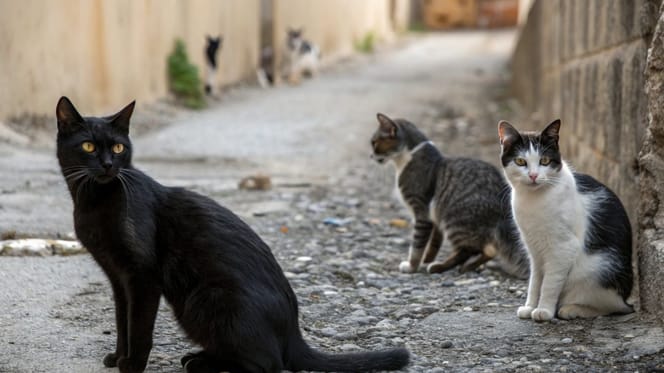

It all started with a seemingly minor incident: a 48-year-old man was viciously bitten on the hands by a stray cat. Eight hours later, the situation became alarming. His hands had swollen to twice their normal size, and the pain was so severe that he went to A&E. As reported by the website Futura, doctors cleaned his wounds, gave him a tetanus booster, and prescribed standard antibiotics. Unfortunately, this initial treatment failed.
A worrying resistance
The next day, the patient's condition worsened. His forearms were red and swollen, and his fingers showed signs of a deep tissue infection. He was rushed to hospital, where he had to undergo surgery to remove the infected tissue and was given several types of intravenous antibiotics.
Intrigued by the severity of the infection, researchers at Cambridge University Hospital analysed the samples. While cat bites are usually associated with the bacterium Pasteurella multocida, the DNA results revealed a bacterium from the Globicatella genus.
A new member of the Globicatella genus
Until now, only two species were known in this group, and neither was a perfect match for this one. This new species, which does not yet have an official name, is notable for its resistance to antibiotics that are usually effective against common skin infections.
The British patient eventually made a full recovery after five days of targeted antibiotic treatment, but this discovery serves as a reminder that urban wildlife remains a reservoir of largely unexplored bacterial biodiversity.
Translated from the FR Wamiz website using artificial intelligence

