
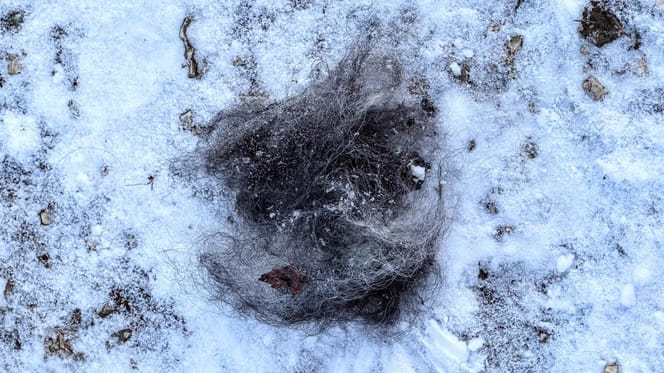
It's a familiar sight on country walks: mysterious clumps of fur littering the path, the undergrowth, or, as is the case right now, the snow. On closer inspection, you realise it's dog fur.
Many owners have got into the habit of grooming their four-legged friends outdoors during moulting season to get rid of loose fur. It's convenient, as it saves making a mess at home. But this practice has a major drawback!


A deadly threat to wildlife
"It's organic, and the birds will be delighted to have soft material for their nests," is the common justification from many owners who brush their dogs in fields or woods during moulting season. However, this well-intentioned thought is a fatal mistake that can cost hundreds of chicks their lives.
A viral Facebook post by renowned German vet Ralph Rückert is currently causing a stir online. Within hours, his poignant appeal was shared over 6,300 times. His message is clear: what dog owners leave behind after grooming in the woods becomes a chemical and mechanical weapon against nature.
A cosy nest turned death trap
The problem is invisible: many dogs are treated with spot-on products or wear collars to protect them from parasites. But what protects the dog is deadly for other animals. "If the dog's fur comes from an animal that has been treated with an external anti-parasite product for ticks, these active substances can be fatal to baby birds," explains Dr Rückert.
Birds collect the contaminated fur, build their nests with it, and lay their naked chicks directly onto the poison. The consequence is a silent death in the nest.
But even for dogs that are "chemical-free", the expert warns against the "bad habit" of leaving fur in the woods. The fine hairs are extremely tough. If the tiny legs of young birds get tangled in them, they can end up being severed. "As a vet, you see all sorts," states Dr Rückert emphatically.

A heated online debate
The post has clearly struck a chord. Many people online have expressed their shock and gratitude: "I had no idea the consequences were so serious. I won't be doing it again," wrote one user, echoing the thoughts of many.
But there are also those who refuse to listen. Comments like, "And when a wolf leaves its fur behind, that's not a problem?" are plentiful. It's a comparison that doesn't hold water, as wolves and other wild animals don't have chemical neurotoxins on their skin.
The vet's conclusion is unequivocal: protect your dogs from ticks (it's important!), but dispose of the brushed-out fur where it belongs: in the household bin, not in the nurseries of our local birds.