

From their very first hours of life, a kitten's metabolism is running at full throttle. Unlike larger mammals, cats experience incredibly rapid growth during the newborn stage.
A mother cat’s milk is perfectly designed for this challenge: it is far richer in protein and fats than cow’s milk. This high nutritional density helps the tiny newborns overcome their initial fragility through rapid cell development and bone strengthening.
Why is a kitten's first week critical?
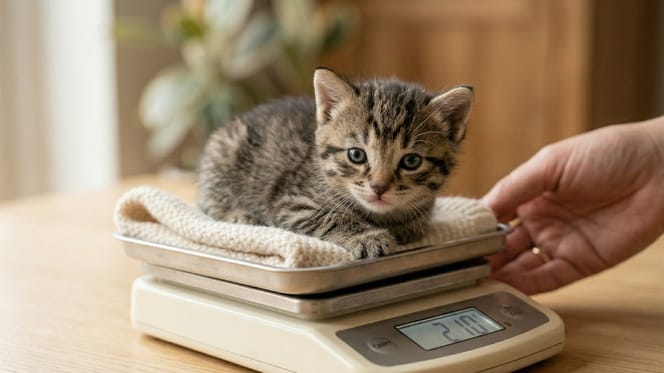
From a veterinary perspective, daily weighing (at the same time each day) is the only truly reliable way to monitor a litter's health. A healthy kitten should gain between 10 and 15 grams per day.


If their weight plateaus - or worse, drops - over a 24-hour period, it’s a major red flag. This requires immediate action, such as supplemental bottle-feeding or a trip to the vet. Because kittens have almost no energy reserves at this stage, a lack of weight gain can quickly lead to dehydration or hypothermia.
How much should kittens weigh?
To check if your kitten's development is on the right track, there is one simple benchmark to remember: a kitten should double its birth weight by day 7. For example, if a kitten weighs 100g at birth, it should hit the 200g mark by the end of its first week.
Hitting this milestone is a fantastic sign that the kitten is thriving and the mother’s milk is doing its job. Once they’ve passed this one-week mark, they’ll continue to grow at a steady pace as they gain the strength to start exploring their surroundings.
Note: In larger litters, a delay of a day or two can happen, but close monitoring is essential to ensure every kitten grows into a sturdy, healthy adult cat.
Translated from the FR Wamiz website using artificial intelligence