
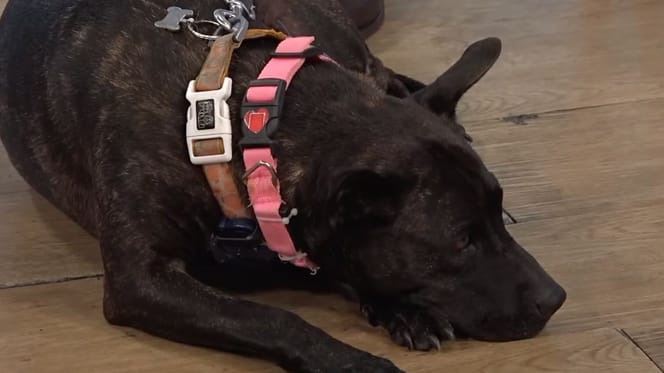
Sadly, in 2024, he learned that his beloved dog Rosie had cancer.
Despite a combination of chemotherapy and surgery, the tumours persisted and Rosie's condition worsened.


Fighting cancer
Paul has no medical background, but he was determined to help save his dog. As an IT professional, he turned to AI to try and find a solution.
During his research, ChatGPT suggested immunotherapy and pointed Paul towards the Ramaciotti Centre for Genomics at the University of New South Wales in Australia. After contacting the university, he convinced researchers to help him. He funded Rosie's genomic sequencing and delved into the DNA analysis.
A cancer vaccine
With the help of the Australian scientists, Paul developed a personalised messenger RNA (mRNA) cancer vaccine. This is the first time a personalised cancer vaccine has ever been designed for a dog.
Rosie received her first injection of the cancer treatment in December 2025, followed by a booster dose in February 2026. Most of her tumours have shrunk. Although they haven't all disappeared, Rosie's health has improved significantly.
Rosie's case shows that mRNA technology can be effective and could potentially be used in human cancer treatments in the future.