
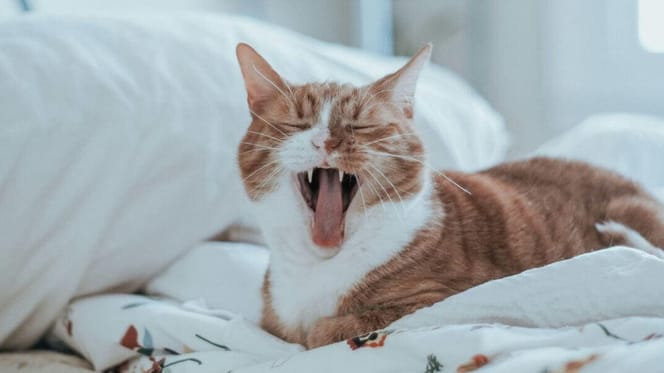

Cats communicate in subtle ways, from tail movements to slow blinks. Although yawning is not necessarily a sign of affection, it can offer clues about how your cat is feeling.
Whether he is sleepy, relaxed or responding to his surroundings, looking at his behaviour as a whole can help you better understand your feline friend.
Why does my cat yawn when he sees me?
If your cat yawns when he sees you, he might simply be sleepy, waking up or settling down after an active spell. Yawning can also occur when cats are relaxed around familiar people, although it is not a reliable sign of attachment on its own.
Comfort and trust
If your cat approaches you, settles nearby and yawns with a relaxed body, he may feel comfortable in your company. Familiar routines and gentle interactions can help create a sense of security, allowing your cat to relax without feeling threatened.
However, yawning alone cannot confirm that your cat trusts you. Consider their overall body language to understand whether he appears at ease.
Sleepiness or waking up
Cats sleep for many hours each day, often in short periods. Your cat might yawn when you enter the room simply because he has just woken up. He may then stretch, groom himself or wander over to investigate.
Relaxation and contentment
Yawning can accompany the transition from activity to rest. If your cat is lounging on the sofa, purring softly or settling beside you, he may be enjoying a quiet moment. This combination of behaviours can suggest a contented mood, although no single behaviour proves happiness.
Do cats yawn when they are happy?
Cats may yawn when they are comfortable, but yawning is not a definitive sign of happiness. It can occur during relaxed moments as well as when a cat feels uncertain or mildly stressed.
A loose posture, soft eyes and neutral ears may suggest your cat feels safe. Conversely, a crouched body, flattened ears or attempts to move away could indicate discomfort.
Yawning is just one part of feline communication, so consider the surrounding circumstances rather than assuming it has a particular meaning.
Can yawning be a sign of love or affection?
It's natural to wonder whether your cat's yawn is his way of saying he loves you. While yawning is not an established sign of affection, your cat may yawn while enjoying your company.
Other behaviours provide more useful clues about your relationship, including rubbing against you, choosing to rest nearby, greeting you with an upright tail and seeking attention.
How to tell if a cat has chosen you
Your cat may show a preference for you by following you between rooms, approaching you for play or sleeping near you. These behaviours can reflect familiarity and peace within your shared environment.
Some cats enjoy plenty of physical contact, while others prefer simply sharing a room. Respecting your cat's preferences helps build comfort and trust.
How do you say "I love you" in cat language?
Try slowly blinking at your cat with a relaxed expression, then gently closing and opening your eyes. Many cats display slow blinking during calm, friendly interactions.
You can also show affection through gentle strokes, predictable routines and giving your cat the freedom to walk away. These small gestures help him feel safe without forcing interaction.
What does your cat's body language tell you?
Pay attention to your cat's posture, ears, tail and eyes when he yawns.
- Relaxed posture: a loose body and soft eyes may suggest comfort
- Slow blinking: this can accompany calm, friendly interactions
- Ears turned backwards: these may indicate uncertainty, irritation or overstimulation
- Crouching or a tucked tail: these can suggest fear or discomfort
- Moving away: your cat may want space rather than attention
Is yawning an appeasement gesture?
Yawning is sometimes interpreted as an appeasement gesture, meaning a behaviour associated with reducing social tension. However, it is not possible to assume that every yawn serves this purpose.
In an uncomfortable situation, yawning might occur alongside other signs of unease. Equally, it may have an ordinary physical explanation. Look at the complete picture rather than treating a yawn as a definite social signal.
Why do cats yawn so big?
A cat's wide-open yawn can look surprisingly dramatic. During a yawn, the jaw opens widely and the surrounding muscles stretch.
Yawning is a normal behaviour in cats, although researchers have not established one complete explanation for why it occurs. Its size does not reveal how much your cat loves you or whether he is trying to communicate a specific message.
Why does my cat yawn so much?
Frequent yawning may follow a familiar pattern, such as waking from a nap or settling down. Boredom is sometimes suggested as an explanation, but yawning alone cannot establish that a cat needs more stimulation.
If your cat seems under-stimulated, try providing opportunities for interactive play, climbing and exploring.
Anxiety or stress may also be relevant if yawning accompanies hiding, restlessness, appetite changes or avoidance. Watch for changes in behaviour rather than focusing on yawning in isolation.
Cat keeps yawning and licking lips
Occasional lip-licking and yawning may be harmless, but repeated episodes can sometimes accompany nausea, oral discomfort or other health problems.
Contact your vet if the behaviour persists or occurs alongside drooling, bad breath, difficulty eating or reduced appetite. Seek urgent veterinary advice if your cat struggles to breathe or cannot swallow normally.
Cat yawning and stretching: what does it mean?
Yawning and stretching often happen together when cats wake up or move from resting to activity. Your cat might extend his front legs, arch his back and stretch his paws before wandering over to you.
This is usually normal behaviour. If he then settles nearby, he may simply be getting comfortable in your presence.
Do cats like you talking to them?
Many cats recognise their owner's voice and may respond by looking over, approaching or vocalising. Whether they enjoy being spoken to depends on the individual cat and your approach.
Use a calm voice and gentle movements. If your cat remains relaxed or approaches you, he may be happy to interact. If he turns away or leaves, give him space.
Enjoy the little signals your cat shares with you
So, why does your cat yawn when he sees you? He may be sleepy, waking up, relaxing or responding to something in his surroundings. If he seems comfortable in your company, the yawn may simply be part of a peaceful moment.
Rather than searching for a hidden message in every yawn, learn your cat's individual habits and pay attention to his wider body language. Respecting his boundaries and providing a secure environment will help you nurture a rewarding relationship, one little feline gesture at a time.


