
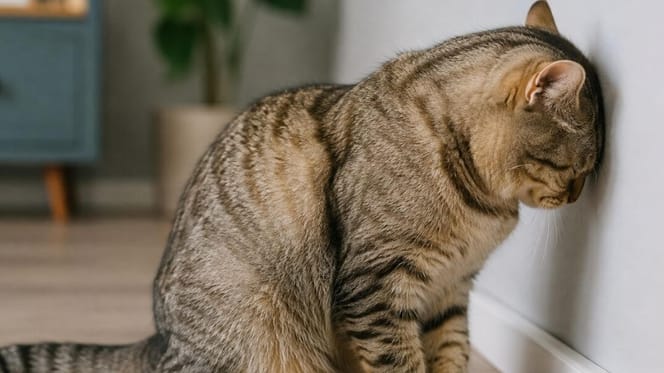

It involves a cat repeatedly pressing its head against a wall, floor, door or another hard surface. This is very different from rubbing its face against an object or gently nudging its owner.
Head pressing is not a diagnosis in itself. Instead, it is a clinical sign that can occur with several conditions affecting the brain, nervous system or the body's metabolism.
What is cat head pressing?
Cat head pressing describes a repetitive behaviour in which a cat pushes the front or side of its head firmly against a stationary, hard surface. It may remain there for an unusually long time or repeatedly move between surfaces.
This head pressing behaviour should not be confused with normal scent-marking. Cats naturally rub their cheeks and faces against people, furniture and other objects. They may also lean their heads against their owners during friendly interactions.
With genuine head pressing, a cat may appear confused, withdrawn or unaware of its surroundings. This distinction is important because head pressing is a sign of illness, rather than a form of affection.
What causes head pressing in cats?
There are several possible causes of head pressing. They include disorders affecting the brain, nervous system, liver and other parts of the body. Identifying the cause requires veterinary assessment and, in some cases, several tests.
Neurological problems
A neurological problem is an important potential cause. Diseases affecting the brain can interfere with normal cat behaviour, movement and awareness.
Possible causes include inflammation of the brain or surrounding tissues, infections, tumours and certain congenital conditions. Some cats may also develop seizures, changes in vision, poor coordination or unusual movements.
Head pressing can therefore be associated with a severe health issue affecting the nervous system and should never be ignored.
Metabolic disorders
A metabolic disorder can also affect the brain and lead to abnormal behaviour.
Liver disease is one example. The liver normally helps remove potentially harmful substances from the bloodstream. When it is not functioning properly, toxins can build up and affect brain function. This can result in hepatic encephalopathy, causing confusion, altered behaviour and other neurological signs.
Kidney disease and some other metabolic disturbances can also affect the nervous system.
Toxin poisoning
Toxin poisoning is another possible cause. Cats can be exposed to harmful substances through ingestion, inhalation or contact.
Potential hazards include some human medicines, household chemicals, certain plants and inappropriate flea or parasite treatments. Depending on the substance, poisoning can cause neurological signs, vomiting, tremors, seizures or changes in consciousness.
If poisoning is suspected, contact a vet immediately rather than waiting for symptoms to disappear.
Trauma and injury
Trauma affecting the head can damage the brain or cause bleeding and swelling inside the skull. Falls, road accidents and other injuries can therefore result in neurological changes, including head pressing.
A cat that develops unusual behaviour following an accident or injury needs urgent veterinary assessment, even if there are no obvious external wounds.
What symptoms can occur with head pressing?
Head pressing is itself a symptom, but affected cats may show other signs depending on the underlying condition.
These symptoms can include:
- Disorientation or confusion
- Vomiting
- Seizures or tremors
- Loss of balance or coordination
- Circling or pacing
- Changes in vision
- Abnormal pupil size
- Unusual vocalisation
- Changes in appetite or behaviour
- Weakness or difficulty walking
- Hair loss or self-inflicted injury
Hair loss and self-inflicted injury can occur if a cat repeatedly rubs or damages its skin while behaving abnormally. They are not specific to head pressing but can provide useful information for a vet.
Is head pressing always a sign of illness?
Persistent head pressing should always be taken seriously. While a cat may briefly place its head against a surface while resting or investigating its surroundings, deliberate, repetitive pressing is not normal feline behaviour.
The distinction between head pressing and normal rubbing is particularly important. A cat rubbing its face against a wall is usually alert and responsive, whereas a cat genuinely pressing its head may appear disorientated or disconnected from its surroundings.
If you see your cat pressing its head against wall or hard surface repeatedly, it requires immediate attention from a veterinary professional.
How is cat head pressing diagnosed?
Diagnosis focuses on identifying the condition responsible for the behaviour rather than treating head pressing itself.
The vet will usually ask about the cat's history and recent behaviour before carrying out a physical and neurological examination. Information about possible injuries, medications, illnesses or exposure to toxins can be particularly helpful.
What tests might a vet recommend?
Depending on the findings, tests may include blood and urine tests to look for infection, organ dysfunction or metabolic abnormalities.
Further investigations can include blood pressure measurement, imaging such as magnetic resonance imaging (MRI) or computed tomography (CT), or analysis of cerebrospinal fluid. These tests can help identify problems affecting the brain or nervous system.
The precise diagnosis determines the most appropriate treatment.
What is the treatment for cat head pressing?
There is no single treatment because treatment depends entirely on the underlying cause.
A cat with toxin poisoning may need decontamination and supportive care, while an infection could require specific medication. Cats experiencing seizures may need anticonvulsant medication, while some tumours or traumatic injuries may require surgery or specialist treatment.
Metabolic conditions may require fluids, medication and dietary management. Some cats need hospitalisation so they can be monitored while the veterinary team investigates the cause and controls their symptoms.
Early treatment can be particularly important when head pressing is caused by a condition that can worsen rapidly.
What should you do if your cat is head pressing?
If your cat is persistently pressing its head against a hard surface, contact your vet as soon as possible. Do not attempt to treat the behaviour at home or assume it will resolve on its own.
Keep your cat somewhere quiet and safe while arranging veterinary care, particularly if it is disorientated or struggling to walk. If you suspect poisoning, take details of the suspected substance or its packaging with you if it is safe to do so.
Head pressing is not affection and should not be mistaken for ordinary feline behaviour. Although the underlying medical issues can vary, the behaviour may indicate a serious problem requiring prompt investigation. Early diagnosis gives your cat the best chance of receiving appropriate treatment.


