
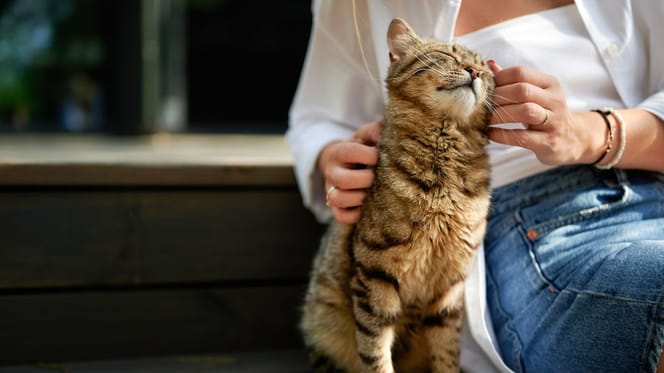

If your cat becomes particularly chatty when dinner time approaches or when they want a stroke, you should know they are speaking specifically to you. While wild felines and adult cats mostly communicate with each other using scents, body language and hissing, the audible meow is an invention almost exclusively reserved for interacting with humans.
A recent study reported by the Los Angeles Times highlights the progress made by researchers and acousticians who are now striving to decode this unique "conversation".
An evolutionary adaptation tailored for domestication
Over thousands of years of domestication, cats have shaped their vocalisation to grab human attention. Kittens naturally meow to call their mothers, but in the wild, this behaviour fades as they reach adulthood. Yet, in our domestic companions, this kitten-like trait is kept throughout their lives.
Scientists have revealed that cats adapt the frequency and tone of their meows to get exactly what they want:
- The urgency frequency: Some meows used to demand attention or food feature a sound frequency close to that of a crying human baby (around 300 to 600 Hz). This triggers an almost instinctive, empathetic response from their owner.
- Custom-made vocals: Every cat develops its own range of sounds and intonations unique to its household, creating a "private dialect" with variations in intensity, duration and pitch.
Translating your cat's vocabulary
Linguists and animal behaviourists studying feline bioacoustics are trying to classify these sound signals to better understand our pets' emotional states:
- The greeting meow: Short and high-pitched, often accompanied by an upright tail.
- The demanding or frustrated meow: Longer, lower-pitched and repetitive, usually heard when their food bowl is empty or a door is shut.
- The chirrup: A soft, rolling sound made with a closed mouth, showing affection or an invitation to play.
Far from being merely independent and quiet animals, our cats have proved to be highly skilled communicators who have learned to use sound to shape their relationship with us.
Next time your feline friend calls out to you, remember they are using a sound code forged by centuries of evolution to speak directly to you.
Translated from the FR Wamiz website using artificial intelligence

