
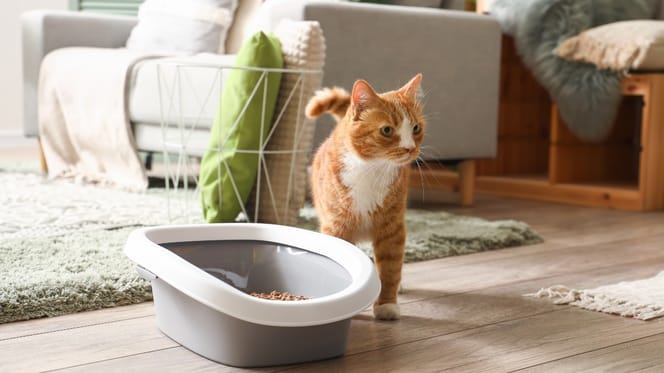

Unless you've managed the incredible feat of teaching your cat to use the human toilet, a litter tray remains an essential part of daily life. Finding the ideal location – a discreet corner that prevents litter from being scattered all over the house, yet still meets your feline's high standards – is often a challenge. Dr Rebecca Greenstein, a veterinary advisor for Rover, shares her valuable tips to help you avoid common placement mistakes.
According to the expert, the secret isn't so much about the type of room you choose, but rather its activity level. "The best place for a litter tray is a quiet, low-traffic, low-stress area that's a bit out of the way, so your cat can get to it easily without being disturbed by children or passing guests," explains Dr Greenstein.

Popular locations and why they might not work
Traditionally, owners tend to opt for the bathroom or the basement. The bathroom has the advantage of an easy-to-clean floor and moderate foot traffic.
The basement also offers plenty of peace and quiet, but the vet has one major reservation: "If your cat has mobility issues or is getting older, going down lots of stairs can become an unintentional obstacle." What's more, placing the tray too far out of sight increases the risk that you won't notice any changes in your pet's urinary or bowel habits in time.
Conversely, the most ill-advised place in the house is, unsurprisingly, the kitchen. As a central and often noisy room, it has multiple drawbacks: your cat can easily be startled there, and the risk of cross-contamination with food is very real. "It's not a good idea to set up a toilet in the middle of your kitchen," she points out.
The bedroom isn't ideal either, due to odours and the risk of shutting your cat out if the door is closed. Likewise, very busy living areas (like a children's playroom) should be avoided, as stress can trigger lower urinary tract diseases, especially in neutered male cats.
The golden rule to prevent accidents
The vet also highlights a fundamental hygiene rule: pregnant or immunocompromised individuals must delegate the task of cleaning the litter tray to avoid any risk from parasites or bacteria.
Finally, to ensure maximum comfort and prevent any toileting issues, Dr Greenstein advises following a simple mathematical formula: take the number of cats in your home, add one, and you'll have the perfect number of litter trays to set up.
Translated from the FR Wamiz website using artificial intelligence

