
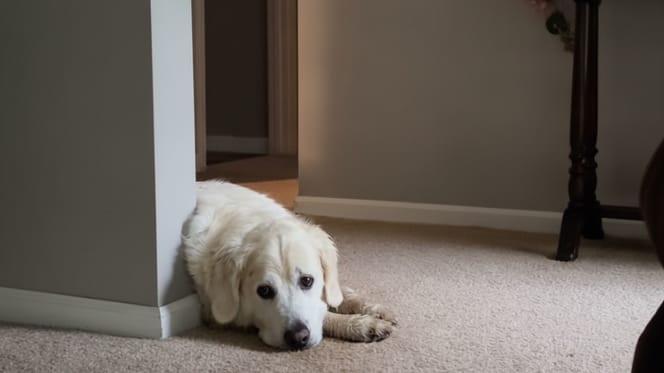

In a poignant video shared on social media, the young woman explained why she intentionally leaves this spot completely untouched. This worn, blackened rectangle of carpet actually marks Archie's favourite place to take his naps.
Where some might only see a dirty stain or a threadbare patch, this "dog mum" sees the purest evidence of her companion's presence. It's "his" spot, and she wants it to remain etched into the floor for as long as possible, already dreading the painful day when Archie will no longer be there to occupy it.



The invisible weight of "anticipatory grief"
In the caption of her post, the Golden Retriever's owner put a name to a taboo but very common feeling: "Anticipatory grief hits you when you least expect it. Seeing my muddy floors makes me smile, because memories were made there and my dog is happy. That's all that matters."
The concept of anticipatory grief (the act of grieving in advance for the future loss of an ageing or ill pet) immediately resonated with people online. Comments flooded in to support the owner.
More than a pet, a member of the family
Numerous studies in animal psychology have shown that the grief felt after losing a pet can be just as intense, and sometimes even more complex, than that experienced when losing a human loved one. The bonds we form with our four-legged friends are based on unconditional love and a shared daily routine.
This is why so many owners preciously keep the chewed-up toys, worn-out beds, or collars of their departed companions. These objects, just like that muddy patch on Archie's carpet, become tangible connections to the love they shared.
Translated from the FR Wamiz website using artificial intelligence

