
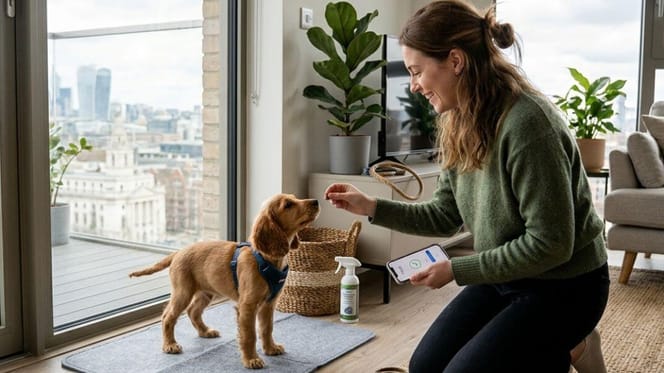

How to toilet train a puppy in a flat? It's entirely achievable with the right approach.
A designated toilet area, a consistent routine and plenty of positive reinforcement will help your puppy learn where to go.
How to toilet train a puppy in a flat?
Before your puppy arrives, decide where you want them to toilet.

Having a clear plan from day one helps avoid confusion and makes it easier to establish good habits.
Creating a safe potty area
Choose a quiet, accessible spot away from food bowls and bedding, with a surface that's easy to clean. Depending on your flat, this might be a bathroom, utility room, balcony or roof terrace, provided outdoor areas are secure and suitable.
For indoor potty training, options include:
- Pee pads/puppy pads: disposable or washable pads offer an absorbent, convenient surface, although some puppies may chew them
- Grass-style toilet trays: these provide a defined area with a grass-like surface
- Real turf: a shallow tray of real grass can offer a more natural alternative
Protect carpets and wooden floors with a waterproof mat. Ask your breeder which surface your puppy has been using; starting with something familiar may help. Keep the toilet area separate from their sleeping and eating spaces.
If outdoor potty training is your goal, identify a suitable spot close to your building. Your puppy needs to be taken to the same place regularly, rather than being expected to choose for themselves.
Establishing a consistent routine and schedule
Puppies have small bladders and need frequent opportunities to go. Take your puppy to the potty area as soon as they wake, after meals, drinks, play and training, before bed, and whenever they sniff, circle or become restless.
Very young puppies may need regular potty breaks every 30 to 60 minutes while awake. The right interval varies, so offer more frequent trips if accidents happen. Taking puppy to potty area at predictable times helps with associating location with toileting.
How to toilet train a puppy in a flat at night
Take your puppy to their toilet spot immediately before bedtime and expect some overnight trips, especially during the first few weeks. An 11-week-old puppy may manage a few hours, but there is no set length of time every puppy can hold their bladder.
Keep night-time visits calm and quiet, and gradually extend the time between them as your puppy matures.
Reward progress and build positive habits
Positive reinforcement is more effective than punishment. When your puppy uses the correct spot, offer immediate praise and a small treat. You can introduce a simple cue, such as "toilet", as they begin to go.
Scent association can help your puppy recognise a familiar toilet area. Keep the location consistent and replace soiled pads as needed. Clean accidents elsewhere with an enzymatic cleaner designed for pet urine, which helps remove lingering odours that might draw your puppy back.
Responding to accidents and flat-living challenges
Accidents are a normal part of learning. If you catch your puppy in the act, calmly interrupt them and take them to the correct area. Praise them if they finish there. If you find a mess later, clean it up without telling them off; they will not understand punishment after the event.
Apartment-specific challenges include lift waits, communal corridors and having no private outdoor space. Keep a lead and harness by the door, and consider carrying a very young puppy to the toilet spot if the journey is too long for them to manage.
Can an 8-week-old puppy pee outside? Generally, yes, if your vet agrees and you choose a safe, clean location. Avoid places frequented by unknown dogs and follow your vet's advice while vaccinations are being completed.
A few other practical training tips/guides can make life easier:
- Roll up rugs temporarily, as soft surfaces can attract toileting
- Use puppy gates to limit access when you cannot supervise
- Keep pads and cleaning supplies close to hand
- Make sure pads or trays cannot be chewed or swallowed
How quickly can you toilet train a puppy?
The quickest way to toilet train a puppy is to combine frequent opportunities, supervision, a consistent schedule and immediate rewards. Some puppies make progress within days, but expecting a reliable result in three days or seven days is unrealistic. Learning takes weeks or sometimes months, depending on age, development and previous experience.
Start puppy toilet training as soon as your puppy comes home, usually from around eight weeks old.
Get extra support with Zigzag
Toilet training is just one part of welcoming a puppy. The Zigzag puppy training app offers step-by-step instructions, training tips/guides and advice to help owners understand their puppy's needs as they grow. Its lessons can support toilet training, daily routines and the development of good habits, helping you work through the early stages at your own pace.
Small steps towards a cleaner, happier home
Whether you choose indoor potty training, outdoor potty training or a temporary combination, consistency is key. Choose a designated potty spot, offer regular breaks and reward success.
With patience, practical preparation and support from resources such as Zigzag, your puppy can learn to feel at home in a flat.


