

And this particular tribute dates back nearly 2,000 years!
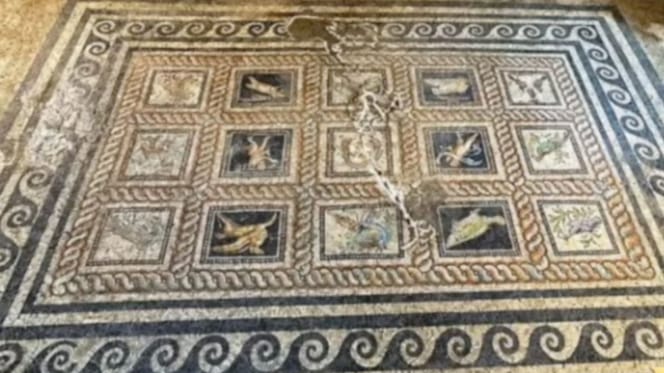
Archaeologists in Turkey made the discovery beneath the ruins of the ancient city of Adramytteion, where they uncovered a villa likely dating from the late second or third century AD.
An extraordinary scene
Inside this villa, researchers found a mosaic made up of 15 different scenes. It offers a fascinating glimpse into the role animals played in Roman households. Among depictions of birds, fish, wild cats, and mythological characters, two specific animals stand out.
A cat and a dog each have their own name written in Greek. For archaeologists, this is a truly remarkable detail. Out of all the animals shown in the artwork, only these two were given names.
Names of their own
In one of the scenes, a light-coloured cat is curled up comfortably on a blue-green cushion. Greek lettering spells out its name: "Zmaragdin", which researchers translate as "Emerald". Its relaxed posture and cosy spot on a cushion suggest it was a beloved house cat living alongside the villa's owners.
Another scene shows a dog in mid-motion, looking as though it is running or leaping. Its name, "Okeanos", means "Ocean". The choice of this name might be linked to Adramytteion's coastal location right by the Aegean Sea.

A special bond
While archaeologists cannot say for certain if these animals were kept as pets in the modern sense, they clearly held a special place in the hearts of the household.
The mosaic likely decorated the main reception room of the villa, which was built around a central courtyard. This means the owners chose to display these pictures in one of the most important spaces in their home.
This mosaic offers us a rare and heartwarming glimpse of a cat and a dog with their very own identities, preserved forever in the stones of an ancient Roman home.
Translated from the FR Wamiz website using artificial intelligence