
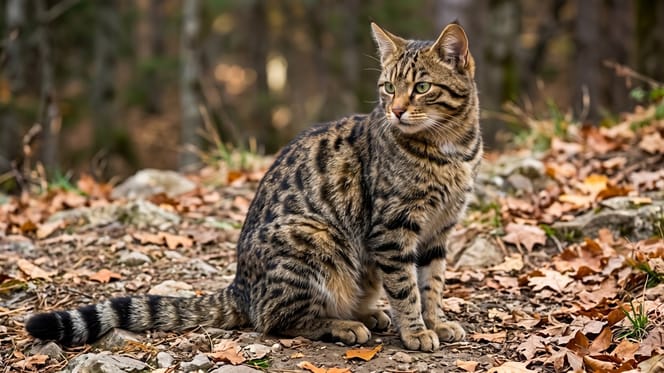

Back in 2016, an animal shelter in Bolivia contacted biologist Paola Nogales-Ascarrunz about an unusual resident. A local resident had rescued the animal as a kitten near a forest, thinking it was a regular domestic cat. Once fully grown, the wild cat measured around 18 inches long and weighed about 3 pounds—making it smaller than the average house cat—with a light brown coat covered in irregular rosettes.
At the time, the researcher thought she was looking at a tiger cat that had already been documented. "I took about a hundred photos," she remembers.

DNA testing confirms suspicions
Three years later, while working on a guide to the wild cats of Bolivia, Nogales-Ascarrunz compared her photos to the known descriptions of Brazilian tiger cats. She noticed that the rosettes on her specimen were much larger, and she began to have doubts.
A study of the genome of 38 South American wild cats finally settled the matter: the animal indeed belongs to a distinct species, named Leopardus tilcayo. This lineage split from other tiger cats around 1.4 million years ago. The researchers chose this name directly from local usage, after a resident explained that his grandfather had always called the animal by that name.
A discovery as worrying as it is fascinating
The Tilcayo is what scientists call a "cryptic" species, meaning its physical appearance alone isn't enough to tell it apart from other lineages. This goes some way to explaining why it was confused with a closely related species for so long. Its population size remains unknown, and its habitat—the Yungas forest—is already under threat from deforestation, wildfires, agriculture, and mining.
For Eduardo Eizirik, an evolutionary biologist and the lead author of the study, this exciting discovery has a bittersweet side. "They risk disappearing before we even discover them," he explains, referring to the many species still unknown to science.
Translated from the FR Wamiz website using artificial intelligence

