
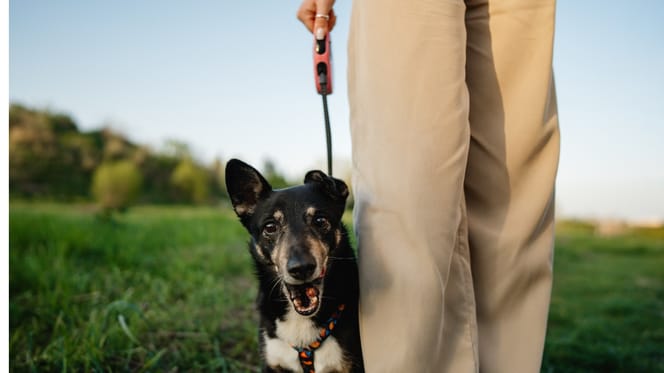

Researchers from the University of Vienna have studied how dogs' brains react to human expressions. Laura Cuaya and Raúl Hernández-Pérez placed 14 dogs inside an MRI scanner and showed them photos of faces displaying various emotions.
The images of smiling people activated the reward system in the animals' brains. This area typically lights up when a dog is waiting for a favourite treat or smells someone they know. According to Laura Cuaya, this shows that happy faces have a positive value for dogs, even when they belong to a stranger.

Activating the reward system
The research team also looked at how the dogs reacted to anger, fear, and sadness. However, the reward system responded exclusively to happy faces.
Raúl Hernández-Pérez explained that while dogs can tell the difference between positive and negative emotions, they cannot quite distinguish between different negative feelings.
How dogs tell different emotions apart
To carry out the study, the two researchers recruited their own Border Collies, Odín and Kun-kun. They also approached owners in local parks to find other calm, well-trained dogs to take part in the experiment.
Translated from the FR Wamiz website using artificial intelligence

