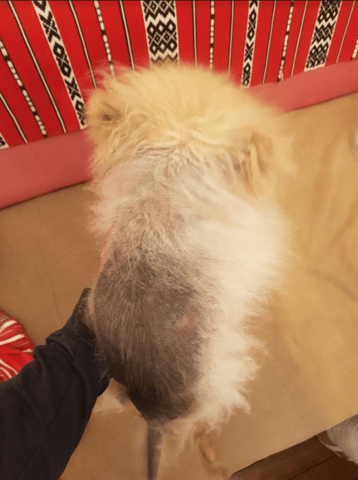
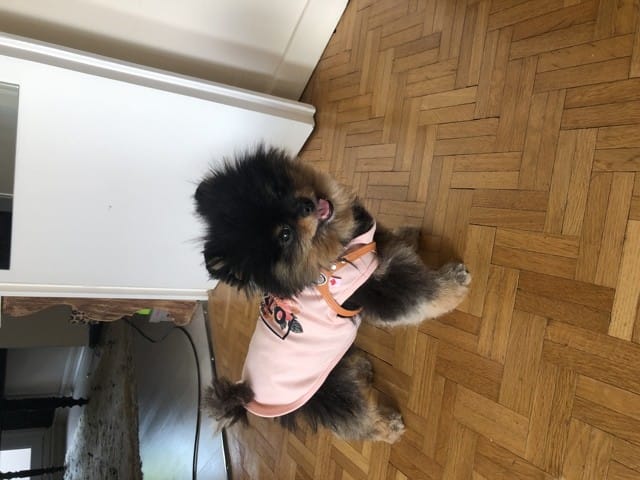
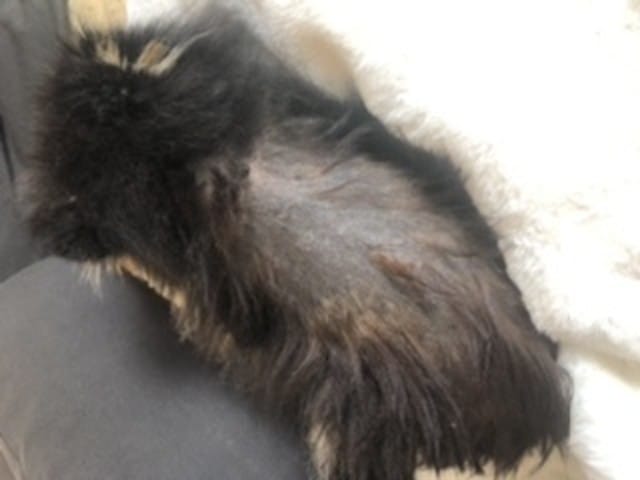
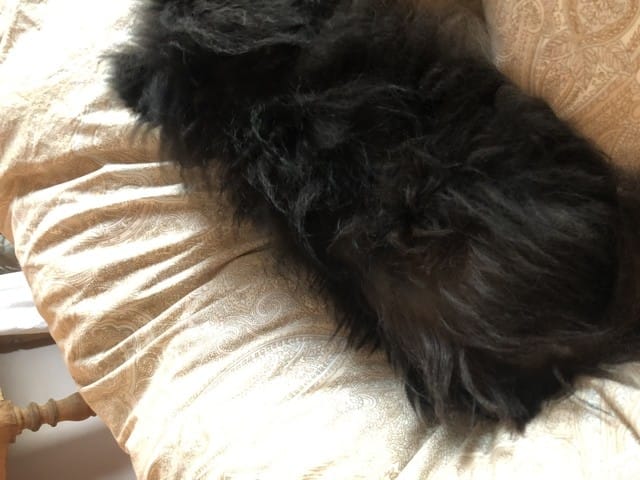
Hi everyone, my dog has been suffering from alopecia for quite a while now. He has lost almost all the fur on his back. I’ve tried the implant, dietary supplements, and another tablet whose name I can't remember, but nothing seems to work; his fur just won't grow back. I'm at my wits' end and don't know what to do anymore. If anyone has any ideas or suggestions, I’d really appreciate it.
Thanks in advance
Translated from French
The forum content is sometimes translated from another language, and posts may concern countries with different animal laws. Do your research before making any decisions.
Since the forum is translated by AI, the translations may contain errors.
Hi everyone,
My little Spitz was diagnosed with alopecia at a specialist vet school. I think the gradual hair loss started about two months after we lost our beloved cat.
My Spitz started thinning out, and I was absolutely heartbroken to see him losing his beautiful coat.
I’d heard about Dermacton (which is actually a British brand), but I was a bit sceptical and took a while to decide whether to buy it. So, it was only a year after he started losing his fur that I finally "took the plunge" and ordered the products online. I got a bundle for about £50 (including the cream and the spray—the cream is for the patchy areas and the spray is for the coat in general). It’s been a month and a half now, and the results are honestly incredible. My little Kinou is well on his way to being a little beauty again! I’ll try to post some before and after photos. This is with me only applying the products once a day, even though the recommended instructions suggest three times a day. I’m happy to chat more if anyone has questions.
Have a lovely day to you and all your little pooches! 🐾
Evening. I’m new to the forum. I’ve been fostering a little Pomeranian for about 18 months now. His alopecia started a few months ago after a foster dog left and another one arrived shortly after. Every time a foster dog moved on, his coat would improve a lot, but as soon as a new rescue arrived, it was a total disaster. He’s just been with my own dog lately, but things aren’t getting any better. His tail is bald and the skin is black; it’s now spread up his flanks, although he still has a bit of fur left. He’s five years old and came from an abusive background. So, if I’ve understood correctly, is there really no solution?? He’s still scratching his tail area quite a lot. Is there anything I can do to soothe it? He’s currently on a salmon-based diet and taking Dermapred.
Evening. I’m new to the forum. I’ve been fostering a little Pomeranian for about 18 months now. His alopecia started a few months ago after a foster dog left and another one arrived shortly after. Every time a foster dog moved on, his coat would improve a lot, but as soon as a new rescue arrived, it was a total disaster. He’s just been with my own dog lately, but things aren’t getting any better. His tail is bald and the skin is black; it’s now spread up his flanks, although he still has a bit of fur left. He’s five years old and came from an abusive background. So, if I’ve understood correctly, is there really no solution?? He’s still scratching his tail area quite a lot. Is there anything I can do to soothe it? He’s currently on a salmon-based diet and taking Dermapred.
Like Kikaah said, you're better off seeing a specialist vet dermatologist.
It's not necessarily down to stress; it took us three years to get a diagnosis of genetic alopecia for Papy, and the poor thing went through every test and treatment under the sun in the meantime (three treatments for demodectic mange without even doing a skin scrape – thanks a lot, vet – his skin was absolutely raw by the end of it).
He’s a bit patchy now, and it’s not the prettiest sight, but he’s not in any pain at all, so we just have to live with it.
If it’s not a medical issue, then it could well be down to stress. Is your dog showing any other symptoms or behavioural problems? Did anything change or happen shortly before she started losing her hair? As a last resort, you might need to look into anti-depressants. It’s much better for her to be happy on medication than to spend her life feeling distressed. Alopecia can often be a reflection of your dog's mental state.