
Litter tray liners: for or against?

Aurore Boréale
Aurore boréale Icon representing the flag French
Report

Hi everyone,

I’d like to know if you use liners for your litter tray or not.

I used to use them to protect the tray, but they always ended up full of holes, which made cleaning a real hassle. I stopped using them because of that, but now the tray is getting damaged from the constant contact with urine.

Looking forward to hearing your thoughts, thanks.

Translated from French
icon info

The forum content is sometimes translated from another language, and posts may concern countries with different animal laws. Do your research before making any decisions.

Since the forum is translated by AI, the translations may contain errors.

Loading editor

Write your message and upload a photo if you want to! Please remain courteous in your exchanges.

Your post will be visible to all members of the international Wamiz forum.

22 answers
Sort by:
  • K
    Kochka78 Icon representing the flag French
    Report

    Just a quick tip – don’t use the green scouring side of the sponge to wash the litter tray. You want to avoid scratching the plastic surface so it stays non-porous and the tray lasts longer.

    Another issue with litter tray liners is that they don’t allow the litter to absorb urine properly; they don't actually make cleaning any easier and they don’t protect the inside of the lid either.

    Translated from French
    ?
    Anonymous user Icon representing the flag French
    Report
    I’ve had the exact same issue with litter tray liners; they always end up getting punctured, so they're completely useless. My previous tray was also ruined by the urine; it leaves stains at the bottom that won't come out even with cleaning products because the urine has damaged the plastic. It won't actually go through the bottom, though—it's just normal wear and tear. I moved house recently and took the opportunity to buy a new one, as I’d had the old one for about two and a half years. You don’t need to change them very often; it's better to wait until it’s properly worn out because, at the end of the day, it’s only for the cat to do its business in... it’s not meant to look nice or be on display, so it doesn’t matter if it’s stained. Once the whole bottom is covered in marks, that's when you can think about buying a new one. This post is two months old now...
    Translated from French
    ?
    Anonymous user Icon representing the flag French
    Report
    I've had the exact same issue with litter liners—they always end up getting ripped, so they’re a bit pointless really. My previous tray was also ruined by the urine; it leaves stains at the bottom that won't budge even with a good scrub, as the urine actually damages the plastic. It won't create an actual hole, though, it's just normal wear and tear. I moved house not long ago and took the chance to buy a new litter tray; I’d had the other one for about two and a half years. You don't need to change them all that often, so it's best to wait until it's properly worn out before replacing it because, at the end of the day, it's just for the cat to do its business in... it's not meant to look nice or be on show. So even if it's a bit stained, it's not the end of the world. Once the whole bottom is covered, that’s when you can think about getting a new one.
    Translated from French
    Cocacola
    Cocacola Icon representing the flag French
    Report

    To keep the litter liner in place, all you need is a good elastic band... 🙄

    Mind you, that doesn't solve the issue of the cat clawing holes through it.

    TOP TIP: I use boxes that aren't actually sold as litter trays – they're the Samla bins from IKEA.
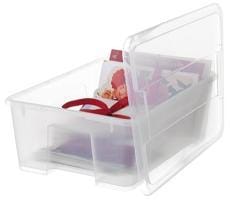
    They cost less than £2.50 each, so at that price, once it’s worn out I'll just bin it and buy a new one!

    I realise this might not help those who use hooded trays with a flap, but I actually have a piece of furniture that's been specially customised for my cat's litter tray, so I don't need a lid...

    Translated from French
    Aurore Boréale
    Aurore boréale Icon representing the flag French
    Report

    Initially, I used white vinegar (the most effective thing for limescale). The result: my cats started going outside their trays because they couldn't stand the smell of the vinegar, which really lingers even after a thorough rinse—hence the hydrochloric acid.

    That's exactly what I was worried about with the vinegar, but after a proper rinse and letting it dry outside in the fresh air, the smell vanished and didn't bother my cat at all.

    Translated from French
    ?
    Anonymous user Icon representing the flag French
    Report

    Personally, I don't bother with it because I find it's easier and less of a faff not to.

    Translated from French
    Mado77
    Mado77 Icon representing the flag French
    Report

    Initially, I used white vinegar (it's the most effective thing for limescale). The result: my cats started going outside their trays because they couldn't stand the smell of the vinegar, which really lingers even if you rinse them well—that's why I use hydrochloric acid now.

    Anyway, as I mentioned, thanks to the leaflets I put at the bottom of the trays, if I have to descale them once a year, that's the absolute most.

    Translated from French
    Farfalla56
    Farfalla56 Icon representing the flag French
    Report

    Hydrochloric acid?! Vinegar is just as effective, easier to get hold of and less harmful!

    Translated from French
    Mado77
    Mado77 Icon representing the flag French
    Report
    Thanks for your replies. Actually, the tray isn’t just stained, it’s been corroded by the urine. I don’t want to have to change the whole hooded tray every three months because of it, and I’m not sure if I can buy just a replacement tray that fits. @Ciflette, which brand of liners do you use? They might be sturdier. Hi there, Personally, I use glossy paper—like the leaflets you get through the letterbox. It protects the bottom of the tray and it’s free. Otherwise, to clean the bottom of the tray when it’s covered in urine scale: - Pour a bit of neat hydrochloric acid into the bottom of the tray and leave it to soak for 3–4 minutes (a bit longer if the tray is really bad). - Then pour out the acid (it won’t damage the pipes) and give it a quick wipe with a sponge to get rid of any remaining scale. - Then, and this is a really important step, rinse the tray thoroughly. PLEASE NOTE – SAFETY PRECAUTIONS: Hydrochloric acid is toxic and corrosive to anything organic. Use household rubber gloves. Also, while it’s soaking, make sure the tray is kept well out of reach of pets and children. Because of the fumes given off, you should do this part either outside (but keep an eye on it) or in a perfectly ventilated room (the bathroom is ideal as you can put the tray in the bath or shower and just close the door, which means you don’t have to stand there watching it). It’s a very quick and effective way to clean a tray and it’ll leave it looking brand new. And to avoid having to do it too often, do what I do: use old flyers at the bottom of the tray. With this system, I very rarely have to descale my trays, even though I have several cats. Another tip: to stop litter trays smelling, mix some used coffee grounds in with the litter.
    Translated from French
    ?
    Anonymous user Icon representing the flag French
    Report
    I’m all for it, they don’t dig any holes. Mind you, my cats don’t actually scratch in the litter, they scratch next to it 😌
    Translated from French
  • 10 comments out of 22

    See more
  • Do you have a question? An experience to share? Create a post on our forum!